

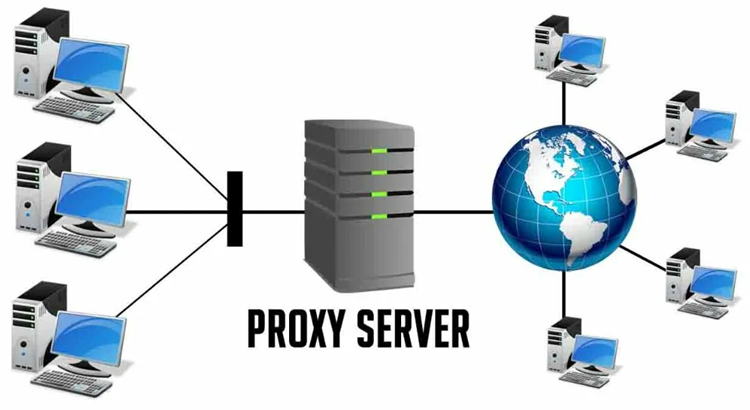
A proxy server is an intermediary between a user and the target resource on the internet. When you send a request to a website or API, it passes through the proxy and then reaches the destination server, with the return response also returning through the proxy.
The main practical value of a proxy is managing the route and connection parameters: you can hide your real IP address, distribute traffic, speed up access through caching, or control access rules. Different Stable Proxy types are selected depending on the task at hand, as their capabilities and limitations vary significantly.
How a Proxy Works: Basic Principle
The proxy accepts the client’s request, modifies it if necessary (for example, by adding headers, applying filtering rules, or selecting the outgoing IP), and then forwards it to the destination server. For the website being accessed, the proxy appears to be the source of the request, not the end user.
Forward and Reverse Proxy
A forward proxy is used on the client side: it helps the user access the internet through an intermediate server. A reverse proxy is hosted on the service side: it receives incoming user requests and distributes them among internal servers, hiding the infrastructure and increasing resilience.
What layers does a proxy operate at?
- HTTP/HTTPS proxy – optimal for web traffic, supports headers, and can manage access to websites.
- SOCKS proxy – more versatile, suitable not only for browsers but also for various applications that support SOCKS.
Summary: How a request passes through a proxy intermediary
A proxy server receives a request from a client, analyzes its parameters, and acts as an intermediary between the user’s device and the target resource. To the destination site, the proxy itself appears to be the connection initiator, so the client’s real IP address can be hidden or replaced.
Then the proxy either forwards the request to the destination server, serves it from the cache, or blocks/modifies it in accordance with access policies. After receiving a response, the proxy may additionally apply filtering, logging, compression, or re-caching before returning the result to the client.
- A proxy is an intermediary: it «breaks» the direct connection and builds a «client > proxy > site» route.
- Control and policy: at the proxy level, it is convenient to set rules (allow/deny domains, methods, ports, content categories), conduct auditing, and limit speeds/quotas.
- Acceleration and savings: Caching and traffic optimization can reduce latency and bandwidth load, especially with repeated requests.
- Anonymity depends on the type: from «transparent» (almost completely hides the client) to more private options, where the target resource sees only the proxy address.
- The cost of intermediation: additional delays, functionality limitations (for example, the peculiarities of HTTPS tunneling), and risks associated with using unverified Proxy.
Basically, a proxy operates by sending all data through a controlled intermediary. This provides tools for access control, increased privacy, and traffic optimization, but requires careful selection of the proxy type and configuration to ensure the benefits aren’t offset by delays and security risks.